The Buzz on Bed Bug Services
Table of ContentsThings about Bed Bug ServicesSome Known Questions About Bed Bug Services.Not known Details About Bed Bug Services The Greatest Guide To Bed Bug Services
A professional bed bug inspection is a meticulous process and relies on expertise. Bed bugs are tiny, quick, and skilled at concealing themselves that seek cracks, crevices, and furniture seams. Because of their secretive nature, a thorough inspection is essential to determine the presence and extent of an infestation. Professional inspectors employ a range of techniques, tools, and expertise to identify infestations early, preventing spread and further infestation.The first step in a proper inspection involves knowing the habits and life cycle of bed bugs. Bed bugs belong to the Hemiptera group and undergo a life cycle that includes eggs, nymph stages, and adulthood. Adults are typically small, oval-shaped, reddish-brown, wingless, and equipped with long legs and antennae. Their mouthparts are designed to pierce skin and extract blood, often causing red, itchy welts on hosts. Knowing these traits helps inspectors anticipate hiding spots.
Early detection is critical for effective management. Professionals search for telltale signs such as dark spots of fecal matter, molted skins, and eggs (Bed Bug Services). Female bed bugs are capable of laying hundreds of eggs, leading to rapid infestations if unchecked. Evidence of molted skins or eggshells shows that the infestation is current and necessitates immediate attention
Preparing for an inspection requires attention to detail. Inspectors often recommend clearing clutter from treatment areas, which improves access to furniture and baseboards. Bedding and linens may be treated with heat before inspection, and then kept in plastic bags to maintain cleanliness. Wall decor, mirrors, and pictures may need to be removed to allow access to potential bed bug harborages. Vacuuming furniture and floors can remove loose pests, and vacuum bags should be emptied in a secure location.
Rumored Buzz on Bed Bug Services
The inspection itself is comprehensive and careful. Inspectors focus on sleeping areas like beds, headboards, and mattresses, paying attention to edges, seams, and potential hiding spots. Upholstered furniture, including couches and chairs, is inspected thoroughly, including underneath and inside cushions. Baseboards, moldings, the edges of wall-to-wall carpeting, electrical outlets, closets, and storage areas are methodically checked, as these can be key areas for infestation.
Specialized tools enhance detection accuracy. Flashlights, magnifying lenses, multi-tools, and mirrors allow examination of tight spaces. Monitoring devices like interceptor traps or sticky pads aid in identifying infestation have a peek at these guys trends. Some companies use detection dogs, which detect even small infestations, distinguishing them from old evidence.
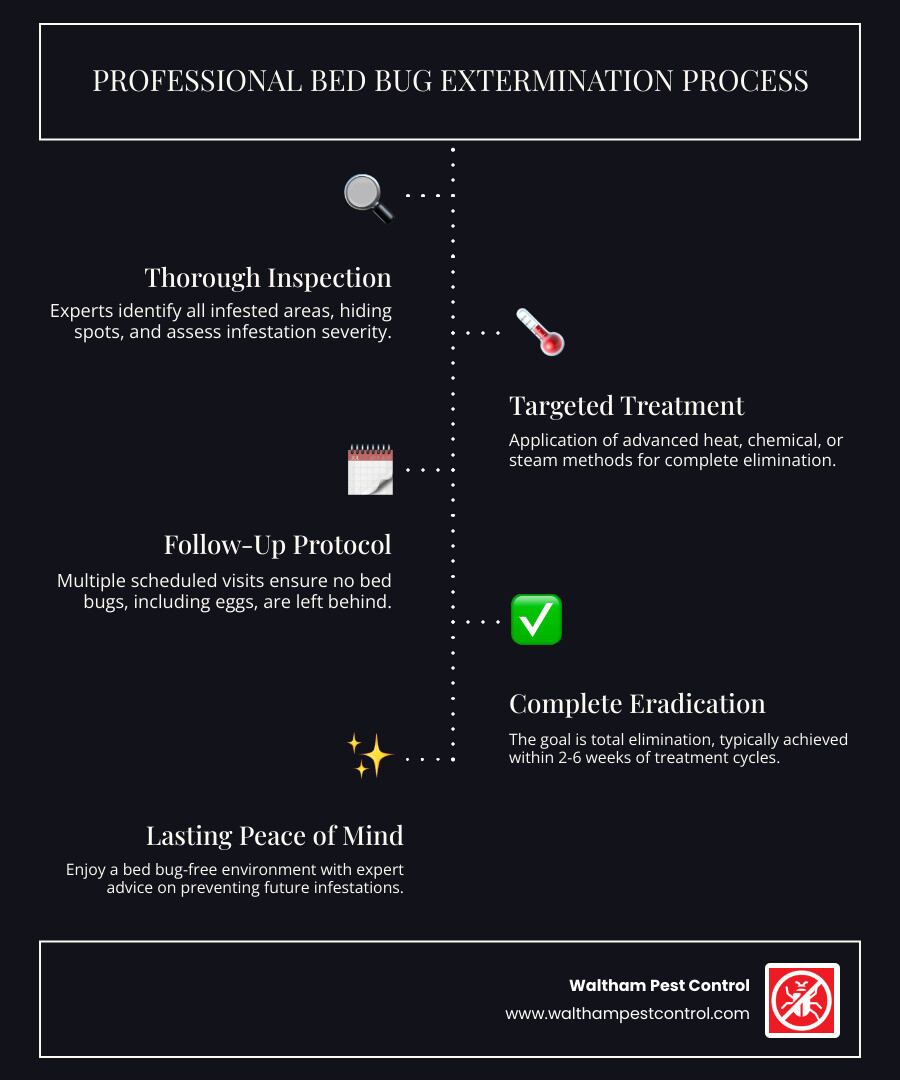

Meticulous documentation is a key component. Inspectors record the locations of evidence, severity of infestation, and treatment recommendations. This ensures accountability and facilitates discussion with residents. Residents are often asked to avoid disturbing potential infestation signs, as this prevents loss of critical information.
After inspection, a monitoring plan may be recommended to follow up on findings. Continuous monitoring detects reinfestation, and interviews with household review members helps pinpoint problem areas. Cooperation from residents supports the inspection process.
About Bed Bug Services
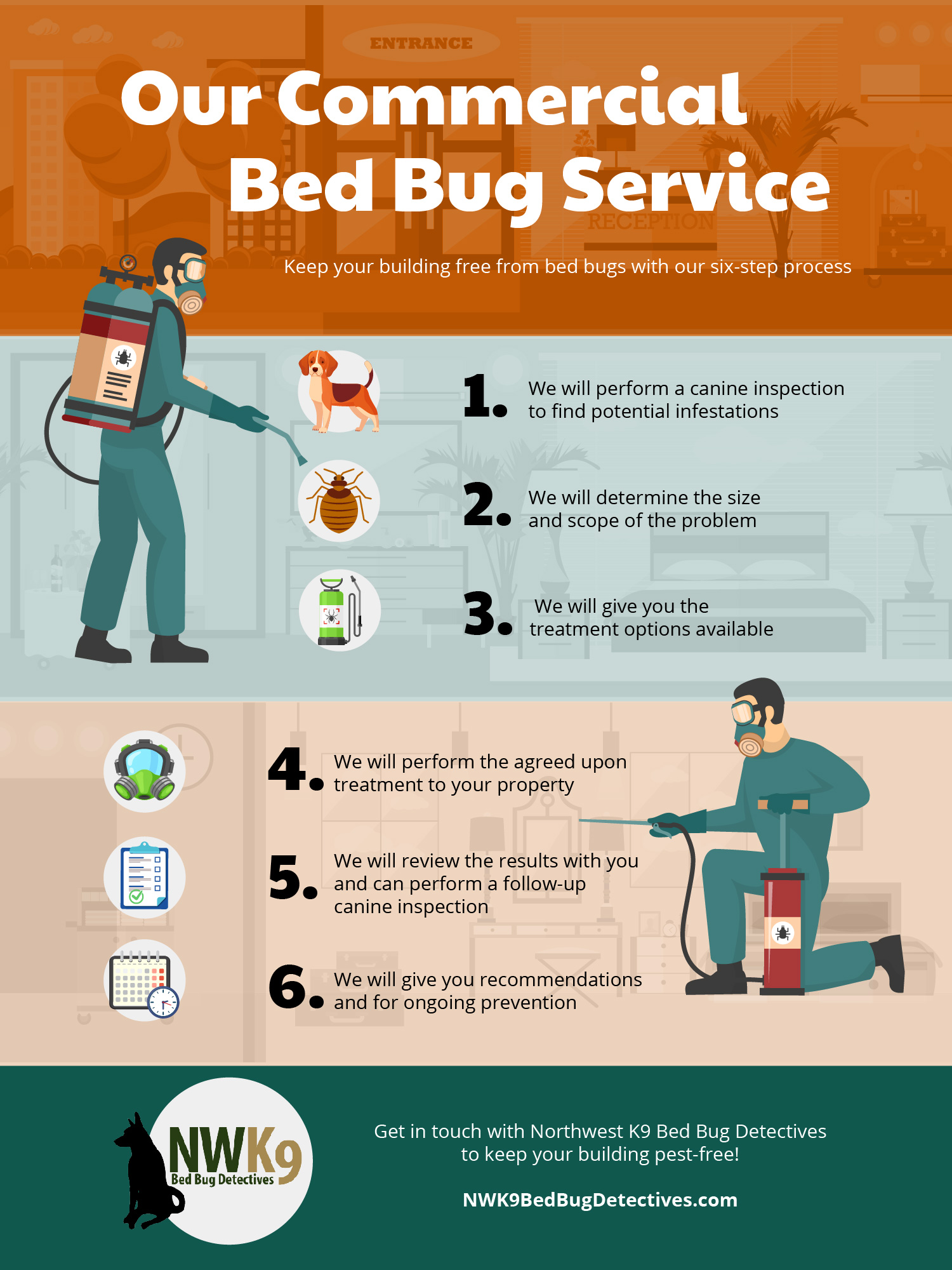
Professional inspections are more reliable than self-inspections. Trained inspectors spot subtle signs overlooked by untrained eyes, avoid unnecessary treatments, and confirm the situation accurately.
Bed bug inspections are particularly important in places where infestations spread easily. Inspectors assess all connected areas to confirm complete assessment (Bed Bug Services). This stops further spread
In summary, a professional bed bug inspection requires knowledge of bed bugs, property preparation, careful examination, tool utilization, record-keeping, and follow-up monitoring. Each step contributes to accurate detection, effective treatment planning, and long-term prevention.
An Unbiased View of Bed Bug Services